
Feedback from the Capital Markets
By Nate Ricks
We believe the current environment continues to reward disciplined, fundamentals-driven investing in multifamily. Liquidity is improving at the margin, yet underwriting remains exacting: equity is emphasizing untrended yield on cost and credible paths to mid-teens net IRRs, while lenders favor straightforward, well-covered business plans with conservative leverage. That balance—incrementally looser markets but persistent discipline—shaped our sourcing, bid posture, and partnership dialogues throughout the end of the year.
Market Overview
Transaction pipelines picked up following Labor Day, with brokers noting greater post-summer activity across Texas and select Mountain West metros even as regulatory headwinds slowed Denver. Equity groups were “on the offensive,” but remained selective by submarket, vintage, and business-plan clarity. On the debt side, agencies stayed active where affordability components exist; banks leaned into relationship lending at ~55–60% LTV; and debt funds competed on speed and structure, with floors in the ~SOFR +215–260 bps range (lower on larger tickets). Life companies stayed cookie-cutter at roughly T+160 and higher coverage, often avoiding pre-2000s vintages unless leverage was very low.
Equity Sentiment
Across our conversations this quarter, allocators reiterated clear hurdles: untrended YOC thresholds typically in the mid-6% to low-7% range by vintage, mid-teens net IRR for Core Plus, and high-teens to 20%+ for more opportunistic profiles. Groups with flexible mandates and strong operator alignment leaned into light value-add in 1990s+ product—and, selectively, into 1980s assets where basis, differentiation, and capex clarity support a 7%+ untrended YOC. The common denominator: straightforward deals with good stories, credible submarket growth outlook, and conservative exit caps.
Notably, some funds that earlier in the year red-lined San Antonio signaled conditional openness at the right basis and with resilient employment drivers, while others remain cautious given delinquency and limited trade activity. Dallas continues to draw capital despite tight cap rates, supported by expectations of supply tapering and rent normalization into 2026–2027. Houston saw consistent buyer activity, particularly for 1990s+ assets.
Debt Markets
We continue to see competitive quotes for well-covered, value-add execution. Banks are active but relationship-driven, often pairing low leverage with deposit expectations; debt funds will execute at 60–70% leverage on value-add projects; agencies remain a dependable backstop when affordability or mission fit applies. Intermediaries report more “hand-holding” across deals—reflecting lender selectivity rather than an absence of capital.
Regional Color
Within Texas, buyers gravitated to Dallas‐Fort Worth and Houston for 1990s+ garden and suburban infill. San Antonio underwriting continues to require a wider pricing spread and demonstrable occupancy and trade-out momentum; operators with crisp expense control and delinquency management have a clearer path to capital. In the Mountain West, Salt Lake City and select secondary markets drew interest for off-market 1990s deals with 9’ ceilings and credible cash-on-cash ramps.
What Investors Are Paying For
- Untrended Yield on Cost: High-6s to ~7%+ for 1980s vintage; low-6s to mid-6s for 1990s+ depending on submarket and value-add scope. Multiple groups flagged 7% as a psychological floor for older stock absent unique differentiation.
- Return Targets: Mid-teens net IRR for Core Plus; high-teens to 20%+ where heavier value-creation is underwritten; several funds emphasized exit caps above fixed-rate debt and conservative rent/expense growth.
- Deal Qualities: Focus on a strong basis and good stories.
How We Are Positioned
We remain oriented toward resilient, cash-flowing assets with conservative leverage and clear operational levers—targeting value-add where submarket absorption and expense discipline can support a path to ~7% untrended YOC on older vintages and mid-6s on 1990s+ product. That posture reflects our core principles—integrity, excellence in execution, and disciplined decision-making—applied consistently through the cycle.
Our team continues to execute a rigorous, relationship-first equity process: systematic qualification of partners, multi-channel outreach, and data-driven tracking from first touch to commitment. This framework remains essential as capital re-engages—we do not assume a broad thaw; we prepare for disciplined capital to move quickly when the story is right.
Outlook
We believe the balance of 2025 will continue to favor investors who pair patience with readiness. Supply dynamics should improve progressively into 2026, and we are observing a healthier bid-ask dialogue where basis, business-plan clarity, and cash-flow resilience carry the day. Our pipeline reflects that reality, and we will lean into opportunities where underwriting meets our thresholds and partnership alignment is strong.
Feedback from the Pipeline
By Hunter Graul
Texas and the Mountain West are working through a supply hangover. Elevated Class A deliveries in 2024–2025 pulled renters up-market and pressured B & C assets on rents and occupancy. Sponsors who paired value-add plans with high-leverage, floating-rate debt are running out of cash, and lenders are increasingly pushing resolutions. We’re now seeing the first meaningful wave of distressed and lender-nudged sales in San Antonio, DFW, and select Austin submarkets often at or below outstanding loan balances. With pipelines thinning into 2026, this is the window to buy durable, well-located 1980s vintage at compelling per-pound pricing. The edge is simple: day-one positive leverage on conservative debt, valuations struck on suppressed rents (10–20% below peak), and a property-tax reset we underwrite prudently. The opportunity favors disciplined buyers who can close, fund capex up front, and operate cleanly without relying on aggressive rent growth. We’ll continue to pursue newer, nicer assets when pricing is right, but the best near-term risk-adjusted returns are in workforce housing acquisitions where basis and operational simplicity drive outcomes.
Acquisition Blueprint & Deal Criteria
Our target profile is renovated (or partially renovated) 1980s product in good locations, strong schools, proximity to employment nodes, and quality retail while avoiding high-crime pockets. We prioritize assets with resident-friendly features (e.g., widespread W/D connections), durable site infrastructure, and recent common-area upgrades that reduce near-term execution risk. Basis is paramount: many sellers from 2020–2022 have expended significant capex but face maturities or operating shortfalls; we step in where our price reflects today’s NOI and the remaining work. Capital structure must be simple and right-sized agency debt, 5-year fixed or Freddie floaters with rate-cap reserves and we fully capitalize post-close capex with realistic replacements for older systems. We underwrite today’s rents, elevated bad debt, and normalized trade-outs; upside from stabilization and supply roll-off is treated as optionality, not a requirement. Hold periods are 3–5 years with a sell-early bias once return hurdles are met.
Thoughts from PCC’s CIO
By Darren Hulick
It is no secret that a surge in new apartment construction across supply-heavy markets has placed significant downward pressure on rents over the past 12 to 24 months. While declining rents have broadly affected the multifamily sector, the impact has been most pronounced among older, vintage communities. The combination of the “filtering effect,” which I will discuss further, and falling rental rates has created increasing distress for many of these assets.
However, as we have underwritten a number of 1980s-vintage properties that are not formally classified as distressed, we are observing several less obvious, yet meaningful, consequences of this new supply environment.
Although some of these communities continue to meet their debt service and AP obligations, declining rents paired with rising bad debt and operating expenses have caused these properties to shift to survival mode for the last 24-36 months (depending on the market). This shift has led to the disappearance of spending on deferred maintenance. On the surface, these properties may present well during broker-led tours, but during physical due diligence it quickly becomes evident that capital expenditures have been limited to only the most essential items required to maintain occupancy. Deferred maintenance has accumulated in areas such as landscaping, irrigation, parking lots, pool upkeep, plumbing, HVAC systems, wood rot, fencing, stair treads/stringers/landings and balconies.
Across the broader inventory of older multifamily assets, we are finding that items previously classified as deferred maintenance are now being treated as discretionary expenses—meaning that if something is technically functional, even if visibly deteriorated, it is often left unaddressed. This dynamic is creating a growing backlog of deferred maintenance that will ultimately need to be remedied by a new buyer.
Another underappreciated consequence of increased new supply is the rise in bad debt across existing assets. This is, again, a function of the “filtering effect.” As rents and concessions have made newly delivered Class A+ apartments more attainable, tenants from traditional Class A properties have moved up, Class B tenants have moved into Class A assets, and Class C tenants have upgraded into Class B units. As a result, many owners, particularly those operating at the lower end of the quality spectrum, are now serving a tenant base with weaker credit profiles and less stable income. In an effort to preserve occupancy, some of these operators are accepting residents with marginal qualifications, leading to higher costs related to evictions, unit damages, and bad debt.
While we anticipate that both of these trends—rising deferred maintenance and elevated bad debt—will ultimately reverse, the recovery is expected to be gradual and will likely lag behind the broader rebalancing of occupancy in oversupplied markets. In response, we have adjusted our underwriting assumptions to reflect higher capital expenditure requirements and more conservative bad debt expectations, particularly for older vintage assets.
Our disciplined approach and attention to these evolving dynamics position us to identify opportunities that others may overlook—and to deploy capital prudently as the multifamily sector transitions into its next phase of equilibrium.
By Brennen Degner
In our industry, the paradox endures: it is hardest to close deals precisely when you should be buying. When capital is in short supply and values have reset, the path to the finish line grows longer even as the basis you are buying improves. We have grown to really enjoy this part of the cycle; building creative structures, engineering operational turnarounds, and tackling heavy construction that unlocks real value. However, this is also when the market slows to a crawl. People move quickly when the goal is maximizing gains; they move slowly when the task is containing losses, even though speed is often the best way to limit those losses.
 The practical reason is complexity. When assets are changing hands slightly above, or materially below, the loan balance, there are simply too many decision-makers and not enough alignment. Lenders, servicers, special servicers, LPs, and sponsors all sit around the same table with different mandates and clocks. The result is deal paralysis: extensions, incremental “status updates,” and valuation debates that keep everyone busy while deferring the only real decision that matters, price and plan.
And then there is the human component that data rarely captures. Stakeholders managing a loss in capital tend to move through the five stages of grief before they transact. Expectations set during the last expansion die slowly; underwriting premised on peak rents and low debt costs does not easily reconcile with today’s NOI and capex needs. That takes time, especially when business plans require admitting that value is created by fixing the operations and the assets, not by waiting for the next wave of trend growth.
Against that backdrop, we think our markets are setting up for a generational buying window. We target assets in large, durable metros that are experiencing near-term softness, navigating liquidity constraints, and came off a period of exceptionally high transaction velocity at the peak. That tends to create temporary mispricing’s where the pendulum swings too far relative to long-run relationships. This creates opportunities to buy well, fix what matters, and let steady operations do the compounding.
Our approach for this phase is straight-forward: we prioritize basis and execution on today’s fundamentals over optimism. We lean into structures solving for time and capex without overcomplicating the capital stack and we lead with an operating plan starting on day one: collections discipline, make-ready cadence, work-order burn-down, and a resident first operations methodology. If history is a guide, the market will not flip from slow to fast overnight. It will grind toward clearing as options are exhausted and stakeholders accept where we are in the cycle. Our base case is for a tangible pickup in 2026 as more assets become “must-solve” situations and the process friction that defined the last two years gives way to pragmatic resolutions. When that happens, the buyers who have stayed disciplined on price, clear on plan, and patient with process will be best positioned to put capital to work, precisely when it’s hardest, and when it matters most.
By Brennen Degner
The past few years have been a humbling reminder of how quickly markets can shift. In 2021 and 2022, when rents were climbing and capital was easy, it was tempting to believe we had it all figured out. But as the cycle turned, we saw how fragile some of those wins really were. At PCC, we don’t view this downturn as a setback. We see it as a chance to get sharper—on our diligence, our risk management, and our conviction in markets where capital is scarce. If we stay focused, we believe we can turn today’s challenges into tomorrow’s returns.
Digging Deeper in Diligence
 The most important shift we’ve made is in how we approach due diligence. Our reviews were always thorough, but we’ve taken the process several layers deeper. We now incorporate a full-spectrum review that covers the local supply pipeline, zoning regulations, demographic and migration trends, and even shifts in the political landscape. We break down intrinsic value assumptions, capital stack risks, construction exposure, operational volatility, and both micro and macro market dynamics. We then tie those elements together in a comprehensive view of how they impact our investors—and PCC as an operator.
We treat seller financials with the same skepticism we apply to physical inspections. We assume building systems are worse than they appear and expect our inspectors to be detailed, not generic, in their assessments. This detailed process feeds into an internal investment committee memo that scores each transaction’s risk profile across multiple dimensions. In short, the challenges we’ve encountered in recent years have pushed us to build a far more robust and disciplined internal framework for risk assessment and mitigation.
Following the Flow of Capital
This cycle also reminded us: capital flows drive pricing. As interest rates climbed and liquidity dried up, many institutional investors stepped back. Rather than seeing that as a red flag, we saw an opening. When fear and complexity scare others off, good assets can be bought at compelling prices.
That’s why we’re focusing on deals priced at levels we haven’t seen in close to a decade, in markets and vintages the herd is overlooking. We agree with the value investors who say the best opportunities often come when information and competition are scarce. We plan our exits as deliberately as our entries: buying when capital is scarce, and selling when it returns.
Risk First, Always
To capitalize on these openings, we have to protect the downside. For us, margin of safety isn’t a slogan—it’s a daily discipline. We stick to buying well below intrinsic value, capping leverage at around 65% of total cost. That gives us the cushion to absorb surprises.
We’re conservative in how we model income growth, exits, and financing—and we stress-test every deal against higher rates, longer holds, and economic shocks. We also choose partners carefully. We prefer working with well-capitalized vehicles that have the resources and flexibility to solve problems if they arise. We’ve learned that simple structures, conservative underwriting, and strong alignment give us the best shot at managing risk while staying opportunistic.
A Philosophy Grounded in Humility
What ties all of this together is a mindset. We believe the payoff to deep analysis goes up when markets are tough. And we try to remember that when everyone else is fearful, it’s usually the right time to lean in. Still, we’re aware of our own blind spots. We build our process around learning—owning mistakes, seeking out outside expertise, and walking away from deals we don’t fully understand.
This blend of humility and conviction helps us stay grounded in uncertain markets. We don’t pretend to have perfect foresight, but we aim to be better students of risk with each deal.
Looking Ahead
The road ahead will likely stay bumpy. Interest rates, inflation, and macro policy remain hard to predict. But we’re not waiting on a clear signal. We’re positioning the portfolio to perform whether the recovery comes sooner or later.
By going deeper in diligence, managing risk with discipline, and leaning into capital-scarce markets, we’re aiming to turn hard lessons into lasting advantages. Our goal remains the same: deliver strong risk-adjusted returns while staying grounded in the humility this market demands.
Feedback from the Pipeline
By Hunter Graul
As we close out the second quarter of 2025, the multifamily investment market continues to experience a slow and uneven recovery. Investor sentiment remains largely bullish, underpinned by strong long-term fundamentals such as population growth, household formation, and constrained new supply. However, despite widespread capital availability and a collective belief in the sector’s resilience, deal activity remains limited. The reason is simple: sellers and buyers are fundamentally aligned on where the market is headed, but divided on how to price that future today.
Sellers want to factor in anticipated rent growth and recovery trends into today’s pricing. Buyers, on the other hand, want to acquire assets at a discount that allows them to realize that upside over time. As a result, quality assets with true distress remain difficult to find, and transaction volume is being suppressed by this disconnect. In this environment, patience and creativity are critical. While headline distress has yet to materialize at scale, pockets of forced sales and dislocation are beginning to surface, particularly in the Class B and C segments.
Regional Market Analysis
 In Dallas–Fort Worth, investment activity has picked up considerably, especially among institutional buyers chasing Class A assets. Year-one cap rates for these top-tier deals are trending in the 4.50 to 4.75 percent range, despite representing negative leverage in many cases. More generic suburban Class A assets are trading at 5.00 to 5.25 percent, often below replacement cost. Buyers in these segments are accepting short-term operational volatility in exchange for long-term rent growth potential. Class B assets, particularly those built in the 1980s, are trading in the 5.50 to 5.75 percent range, with pro forma upside via renovation. However, demand is more limited at higher check sizes, as equity is proving more difficult to raise. The Class C segment continues to show the greatest signs of distress, with assets trading in the mid to high six cap range. Many of these properties are experiencing significant operational issues, debt imbalances, and limited buyer interest. This is where the greatest near-term opportunity lies, particularly for buyers with the expertise and capital to reposition.
Austin’s market remains stagnant. Trades are limited, and nearly all transactions are occurring on a “per pound” basis rather than trailing cap rates. Suburban deals are trading in the $180,000 to $210,000 per unit range, while older Class B and C assets, though scarce in this market, are priced on pro forma stabilized yields in the 6.0 to 6.5 percent range. There has been little movement in the high-density, urban product segment due to the disconnect between replacement cost and what the market is willing to pay. We expect rents in Austin to stabilize and begin rising by spring 2026, making the next three quarters a potentially attractive window to acquire vintage assets at a meaningful discount to peak 2022 valuations.
 San Antonio presents perhaps the most compelling near-term opportunity. New multifamily starts have effectively stalled, with zero new units breaking ground in the first half of 2025. This comes after an 80 percent decline in starts year-over-year, and positions the market for a significant supply shortage in the coming years. Class A assets are trading in the $160,000 to $190,000 per unit range with cap rates around five percent. Class B and C properties often forced to market by lenders are trading between $50,000 and $80,000 per door with pro forma yields underwritten in the seven to ten percent range. These assets typically come with operational or physical challenges, but the pricing reflects that risk. Several submarkets illustrate the pitfalls of undisciplined investing. With an overconcentration of low-quality assets has created a downward pricing pressure affecting even well-run properties. Our focus remains on well-located Class B and C deals in infill areas with strong demographics and manageable renovation requirements.
 In Denver, the market is working through the absorption of recently delivered inventory. While headline distress is not yet visible, we expect that to change as more loans mature and owners face increased debt service requirements. For now, we are monitoring closely and maintaining dialogue with owners and brokers, particularly in the Class B and lower-quality A segments. Floating-rate loans and undercapitalized operators will likely present entry points later this year or in early 2026.
Salt Lake City is showing early signs of stress, particularly in outer-ring submarkets where recent deliveries have outpaced demand. Although transaction volume remains low, we are seeing growing misalignment between valuations and operational performance. Demographic trends in Salt Lake remain favorable, but investor caution has increased due to recent softness in rents and the increased cost of capital. We believe acquisition opportunities will emerge by late 2025 as distressed sellers are forced to meet the market.
Investment Strategy and Priorities
Across our core target markets, we are concentrating on distressed and underperforming Class B and C assets, particularly those built in the 1980s and early 2000s. These assets often suffer from deferred maintenance and management inefficiencies, but offer attractive upside through strategic capital improvements and operational turnaround. The current bid-ask gap is keeping many deals from clearing, but as lender pressure mounts and cash flow issues persist, we anticipate increased transaction velocity in the second half of 2025.
We continue to underwrite conservatively, focusing on intrinsic value and replacement cost metrics. Our underwriting emphasizes post-renovation yields, capital expenditure planning, and the ability to hold through volatility. Assets priced at a discount to 2022 values and located in supply-constrained infill markets remain our top priority.
San Antonio and DFW currently present the most attractive entry points for near-term deployment, with Austin and Salt Lake City requiring additional patience. Denver is firmly on our watchlist for late 2025 or early 2026 activity, pending further market softening
Looking Ahead
While transaction activity in the multifamily market remains constrained, the foundation is being laid for significant opportunity. Investors with conviction, flexibility, and local market insight will be best positioned to capitalize on the mispricing’s and distress that are gradually surfacing. At Platte Canyon Capital, we are actively engaging with lenders, brokers, and operating partners to identify actionable opportunities that align with our strategy. We expect the next twelve to eighteen months to be pivotal in setting the foundation for future returns.
Thoughts from PCC’s CIO
By Darren Hulick
As we move into the second half of 2025, we are observing some pricing dislocation in certain markets and asset profiles driven by soft fundamentals, mismanagement, persistent interest rate pressures and fatigued lenders who are no longer willing to kick the can down the road. This environment is presenting a compelling window for strategic acquisitions.
After several years of compressed cap rates and rapid rent growth, key markets in Texas have entered a recalibration phase. While the demand side of the equation has remained strong, over-supply of new Class A apartments has caused declining rent growth, tenant filtering and concessions in stabilized assets which has created valuation gaps between sellers and the market. We are seeing distress or highly motivated sellers in certain markets in Texas including San Antonio, Austin and secondary DFW submarkets. With the herd chasing 2000s and newer vintage assets, a capital void has been created for older vintage properties leading to some very attractive going-in cap rates and basis plays for certain assets. We continue to focus on attractive going-in basis and mismanaged assets in which we see a clear path to stabilize the property and add value through professional management and curing deferred maintenance.
Other markets have been a bit more challenging to close the bid-ask spread as political/legislative factors are coming into play increasing the uncertainty around deals in an already uncertain market. While Colorado continues to remain a high-quality market, declining rents in the first half of 2025 and large negative lease trade-outs for older vintage properties are causing significant bid-ask spreads. Many deals that come to market involve sellers who are unwilling to meet current pricing expectations and are instead forced to explore other options, such as loan extensions, which are becoming increasingly rare. In addition to the downward pressure on rents, recent legislation around fees landlords can charge, Energize Denver and political noise around potential rent control has increased the uncertainty for potential investors, exacerbating the bid-ask spread. This has made finding attractive opportunities more difficult than other markets we are in. We continue to track the market in search of attractive opportunities in the suburbs outside of Denver County that have strong employment anchors and lower political volatility.
As market conditions shift in the second half of 2025, we continue to hunt for compelling opportunities while staying disciplined with our underwriting. Our strategy remains focused on acquiring well-located, mismanaged assets at attractive bases—particularly in areas with strong demand drivers and lower regulatory headwinds—where we can unlock value through active management and operational improvements.
Feedback from the Capital Markets
By Nate Ricks
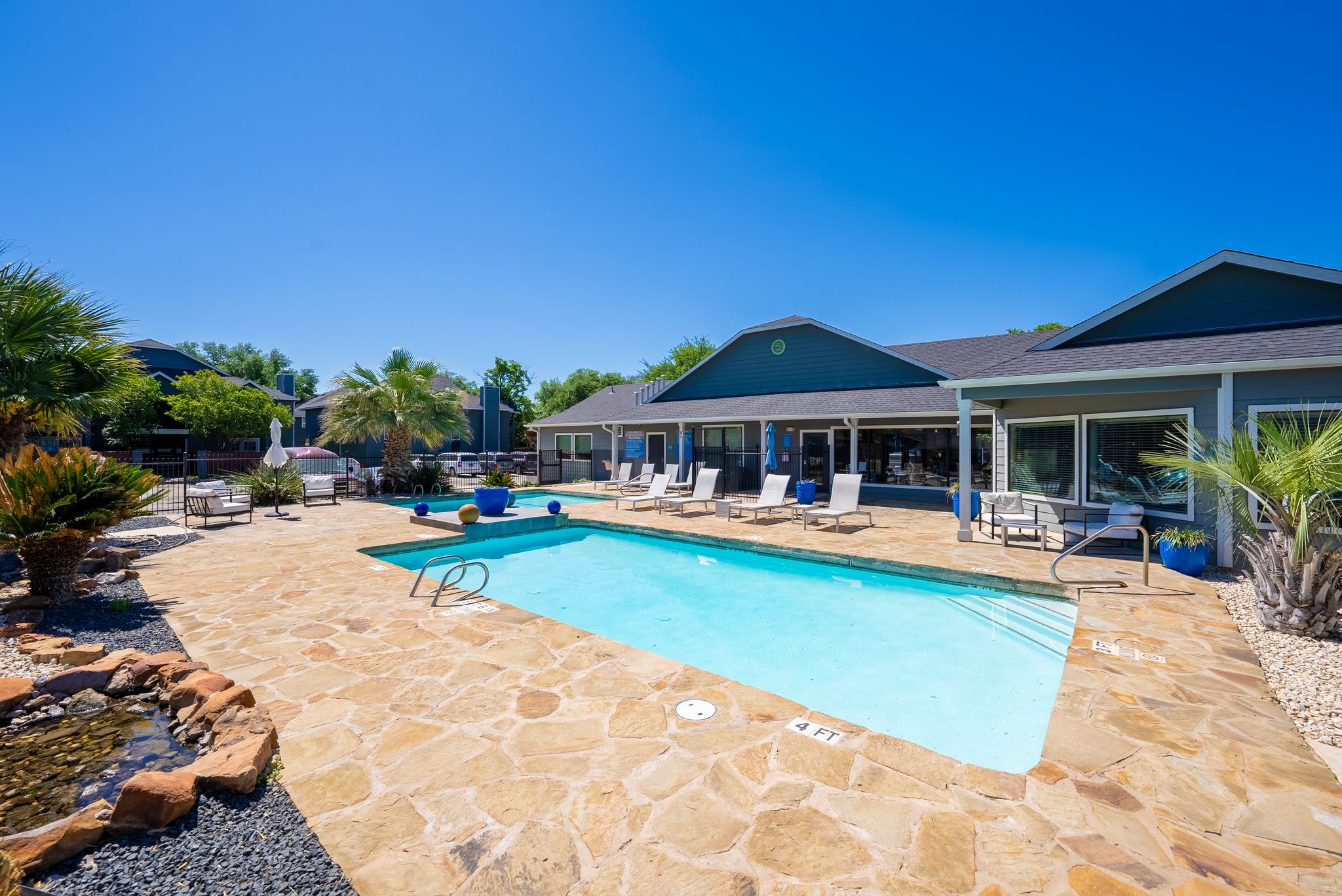
PCC has officially closed on The Allure, a 268-unit community in San Antonio, TX
The whole team at Platte Canyon Capital is very excited about the recent closing of Allure (268 units) in San Antonio. The equity for this deal was not easy to raise; we faced a highly uncertain market, exacerbated by the ongoing tariff roller coaster. However, the market seems to be making a shift that spells good news for the industry.
Since we began raising capital for this deal back in March, we have noticed two things. First, the debt market continues to be eager to deploy capital. This was evidenced by the positive reaction we received after taking this deal out to the broader market. We received significant immediate interest and were able to push for terms that would have been difficult to achieve 12 months ago. Second, the equity “herd mentality” of the 1990s, 2000s, and newer vintages seems to be slowly shifting.
We have a lot of conviction around 1980s products right now. When we took Allure (a 1984/2017 vintage) to market, we expected many groups to view it as a 2017 deal with an 80s component. We learned that almost everyone viewed it as an 80s deal with a 2017 component. This made raising equity challenging, but through the process, we noticed that more groups were open to the vintage, whereas six months ago, it would have been an immediate “pass.” We also learned that equity interested in this vintage is targeting a minimum yield-on-cost of +8%.
Debt Markets
The Federal Reserve is locked in on a “wait and see” approach, and the debt markets continue to be frothy as lenders are eager to deploy capital. We saw evidence of this in the first quarter and continue to see it today. Tariffs have been a central driver of current market behavior, adding a layer of uncertainty to inflation forecasts and, consequently, monetary policy. While the Fed is holding rates steady for now, they are closely reassessing the economic data, with many analysts watching for their September meeting for any potential shifts.
This cautious yet accommodative stance from lenders is reflected in recent pricing. The U.S. 10-year Treasury yield has recently climbed above 4.4%, its highest point since mid-June, reflecting ongoing concerns about inflation and the potential for delayed rate cuts. Despite the uncertainty, we have seen attractive debt fund pricing, with recent quotes at SOFR + 290 and 5-Year Treasury + 150 basis points on agency debt. This indicates that despite the macroeconomic uncertainties, liquidity remains strong in the debt space for well-structured deals.
The current market presents a landscape of cautious optimism. While macroeconomic headwinds, particularly from tariffs, continue to create uncertainty, the capital markets are showing signs of favorable shifts for discerning investors. The eagerness of debt providers to deploy capital, coupled with a potential broadening of equity appetite for older vintage, creates a compelling opportunity for value-add projects like Allure. By focusing on fundamentally strong assets and leveraging the available liquidity in the debt markets, we believe there is a clear path to navigate the present uncertainty and deliver strong returns. The key will be to remain disciplined in our underwriting to capitalize on these evolving market dynamics.
Feedback from the Capital Markets
By Nate Ricks
The capital markets coming out of Q1 remain challenging and, with the introduction of tariffs, much more volatile. After attending NMHC and IMN, my takeaway was one of cautious optimism for 2025 – a similar sentiment to last year. While the precise effects of the tariffs on the multifamily market are still unclear, we believe that this year will present some very attractive buying opportunities. There is considerable noise in the markets right now, and while separating signal from noise is difficult, we continue to focus on the fundamentals: conservatively underwriting quality assets in growing markets.
Equity Market
We are actively raising equity on a distressed deal in San Antonio 1984/2017 vintage – +27% IRR /1.97x EM / 8.30% Untrended Yield on Cost / $85k per unit / ~$11.9M equity check – reach out if this might be of interest.
Over the last 60 days, we have spoken with over 50 institutional groups, and while feedback has varied, several consistent themes have emerged:
- There continues to be hesitancy surrounding older product, particularly pre-1990s vintage assets. The market sentiment has significantly shifted away from this vintage. While this pendulum will eventually swing back, securing equity for older assets remains challenging today. It is worth noting, however, that some of the most compelling opportunities we are currently seeing are 1980s properties.
- Distressed assets remain a primary focus for many groups. While the desire for distressed assets is widespread, many investors are hesitant about the inherent challenges. They often seek “distressed” in name only, and shy away when the profile includes significant construction or lease-up risk, despite an attractive basis and compelling narrative.
- Heavy Value-Add is a difficult profile to sell in the current market. While vintage, market story, and rent growth in specific areas certainly play a role, this warrants discussion. Value-add today is significantly different from what it was 2-3 years ago. Rent growth has remained muted across many of our target markets, making heavy value-add acquisitions difficult to justify. As new construction slows, this dynamic will likely shift as rent growth recovers.
- Return profiles have adjusted since Q4. Opportunistic groups are still targeting IRRs above 20%, and Core-Plus groups are aiming for mid- to high-teen returns. However, the benchmark for Untrended Yield on Cost (UYOC) has shifted. In Q4, discussions revolved around a 6.5% UYOC for newer stabilized assets and +7% for Value-Add/distressed deals. Today, we are engaging with groups targeting 7.5-8% UYOC on value-add/distressed opportunities This emphasizes the need to focus on buying quality properties at a great basis at today’s rents. This metric remains a key consideration for both investors and us as operators when evaluating different opportunities.
Debt Market
Turning to the debt fund markets, they are exhibiting a level of activity we haven’t seen in quite some time. Pricing has become considerably more attractive on both debt fund and agency terms. A recent discussion with a major brokerage group indicated that groups are moving off the sidelines, and operators are receiving multiple term sheets. Sixty days ago, we were seeing debt fund pricing inside of SOFR + 300 and 5-Year Treasury + 150 on agency quotes. Today, as the volatility stemming from tariffs continues to create market turbulence, that spread has widened by 25-50 basis points. Encouragingly, we have not heard of lenders rescinding term sheets, giving us confidence that while spreads have temporarily widened, lenders remain eager to deploy capital. As the markets eventually stabilize, we anticipate these spreads will once again tighten.
Recent Pricing Quotes (Pre Tariff Volatility)
Debt Fund
- Term: 36 months
- Interest Only: Full Term
- Rate: SOFR + 275
- LTV: 75%
Agency
- Term: 60 months
- Interest only: Full Term
- Rate: 5 YR Treasury + 151
- LTV: 65%
In navigating this evolving landscape, our commitment remains steadfast: to leverage our deep market knowledge and disciplined underwriting to identify and capitalize on compelling investment opportunities. We believe that our focus on fundamental value and proactive approach will position us to deliver strong results for our partners throughout the remainder of 2025 and beyond.
Feedback from the Pipeline
By Hunter Graul
The multifamily real estate markets in Texas, Colorado, and Utah are exhibiting varying dynamics in Q1 2025, shaped by supply trends, transaction activity, and investor sentiment. While some markets are showing resilience with steady deal flow, others face liquidity constraints, distress opportunities, and valuation uncertainties. Below, we provide a data-driven breakdown of the current state of these markets, highlighting transaction volumes, new supply pipelines, and evolving investor appetite.
 Austin, TX: Market Saturation & Transaction Slowdown
- Transaction Pipeline: Down 40% YoY, with liquidity challenges across all asset classes.
- New Supply: Over 18,500 units delivered in 2024, with another 15,000+ units expected in 2025—surpassing demand growth.
- Rent Trends: Negative rent growth of -2.8% YoY as landlords increase concessions to attract tenants.
- Investor Sentiment: Hesitant, particularly for Class B and C assets, which are struggling to attract buyers.
Austin’s multifamily market remains oversupplied, particularly in the class A segment, leading to rising vacancy rates (currently hovering around 14% in some submarkets). Transaction volume has declined significantly as buyers and sellers struggle to align on pricing. The few deals closing are mostly newer Class A properties, with older assets seeing minimal interest due to rent stagnation and increased capital expenditure requirements. The short-term outlook suggests continued distress, with potential value-add opportunities emerging in mid-to-late 2025 as pricing adjusts and we work through the oversupply.
Dallas-Fort Worth, TX: Steady Activity Amidst Balanced Growth
- Transaction Pipeline: Moderate but stable—one of the most active U.S. multifamily markets.
- New Supply: 22,000 units delivered in 2024, with 19,000 units planned for 2025, but absorption rates remain above 80% due to strong in-migration.
- Rent Trends: Positive rent growth of 1.9% YoY, supported by job expansion and population growth.
- Investor Sentiment: Remains strong, particularly for stabilized Class A and value-add Class B assets.
Dallas-Fort Worth continues to attract investors due to its diverse economy, population influx, and relative affordability. While the metro is supply-heavy, its pace of deliveries is more manageable compared to Austin and San Antonio. Cap rates range from 5% to 5.5% for institutional-quality properties, with suburban submarkets such as Frisco, McKinney, and North Fort Worth drawing increased investor attention and stiff competition.
San Antonio, TX: High Distress Levels, Especially in Class B & C Segments
Transaction Pipeline: Up nearly 30% YoY, driven by distressed sales.
New Supply: 6,845 units under construction (down 29% from the 10-year average), signaling a cooling in development.
Rent Trends: Flat YoY growth due to absorption struggles.
Investor Sentiment: Active interest in distressed Class B and C properties, as well as opportunities to acquire Class A assets below replacement cost.
San Antonio has emerged as a leading market for distressed multifamily opportunities. Investors have shown interest in acquiring Class A properties at 15-25% discounts from peak valuations, while Class B and C assets face the most pressure. Occupancy rates in some submarkets have dipped below 90%, leading to lender pressure and forced sales. Given the pricing dislocation, we see an opportunity to capitalize on distressed deals in Q2 2025, particularly in areas where absorption is expected to stabilize.
Salt Lake City, UT: Controlled Growth & Limited Distress
- Transaction Pipeline: Minimal activity, reflecting a more balanced market.
- New Supply: 4,100 units expected in 2025, in line with the 10-year average.
- Rent Trends: 2.5% projected rent growth for 2025, driven by economic stability.
- Investor Sentiment: Neutral—few distressed opportunities but steady long-term fundamentals.
Unlike other high-growth metros, Salt Lake City did not experience an extreme construction boom during 2021-2022, leading to a more balanced supply-demand environment today. The market remains relatively stable, with rent growth expected to reach 2.5% in 2025 and occupancy rates holding at 92-93%. Submarkets like Holladay and Sugar House are seeing the strongest rent growth (4-5% YoY). While distressed opportunities are rare, well-located assets with steady cash flow remain attractive for long-term investors.
 Denver, CO: Institutional-Quality Focus & Older Asset Liquidity Challenges
- Transaction Pipeline: Limited activity, mostly concentrated in newer institutional-quality properties.
- New Supply: 10,500 units delivered in 2024, with 2025 construction starts down 20% YoY—easing future supply pressure.
- Rent Trends: -2.59% rent decline YoY, with stabilization expected in H2 2025.
- Investor Sentiment: Flight to quality, with investors favoring post-1990s properties over aging assets.
Denver’s multifamily market remains bifurcated: newer institutional-quality properties continue to attract investor interest, while pre-1990s assets face liquidity challenges. Older properties are struggling to trade, as capital expenditures and insurance costs erode investor returns. Despite short-term challenges, long-term fundamentals remain strong, with suburban areas like Lakewood and Aurora showing resilience due to affordability.
Key Investment Takeaways & Opportunities
Austin & San Antonio: Prime Targets for Distressed Acquisitions (Q2 2025 & Beyond)
- High supply levels and rent stagnation will force further price corrections.
- Class B and C assets offer the best value-add opportunities at attractive discounts well below replacement cost.
Dallas-Fort Worth: Stability & Consistency
- One of the most active multifamily markets, supported by population and job growth.
- Best opportunities in suburban submarkets with steady demand
Denver: Institutional Buyers Favor Newer Assets
- Older properties are becoming illiquid, but post-1990s assets continue to trade.
- Suburban markets with lower vacancy rates present better risk-adjusted opportunities.
Salt Lake City: Limited Distress but Solid Long-Term Play
- Few distressed sales, but strong fundamentals make it a reliable market for long-term investors.
Distressed Market Considerations:
- Cap rates are generally in the low-to-mid 5% range, but liquidity is limited for older properties.
- The bid-ask spread remains wide due to lender reluctance to accept deep discounts. However creative workout and restructuring are on the table.
- Opportunistic investors should closely watch distress-driven price adjustments in late 2025.
Final Outlook
The Q1 2025 multifamily market landscape varies significantly across these metros. Distress is rising but remains selective, with Austin and San Antonio showing the most forced sales, while Dallas and Salt Lake City remain relatively stable. Liquidity constraints for older properties are notable in Austin, Denver, and San Antonio, suggesting a continued flight to quality. Investors who can navigate valuation dislocations and lender workouts may find attractive long-term opportunities as price corrections materialize later in 2025.